Master of Medical Laboratory Sciences in Medical Biochemistry
About the Course:
Biochemistry has emerged as a highly creative and successful discipline that has developed many new technologies and broadly applies the technological advances of other disciplines. Through characterizing the structure, function, assembly, and dynamic changes of macro-molecules, biochemists seek to answer fundamental questions about living processes (basic research) and to bring to fruition significant improvements in the quality of life and medical care (applied research). Diverse advances have converged to allow the development of recombinant DNA technology, and a revolution is under way toward understanding how plants and animals regulate their metabolic processes and expression of genetic information. The great complexity and endless variety of biological systems, together with the need for broad explorations, assure that imaginative research will continue in the field of biochemistry for the foreseeable future.
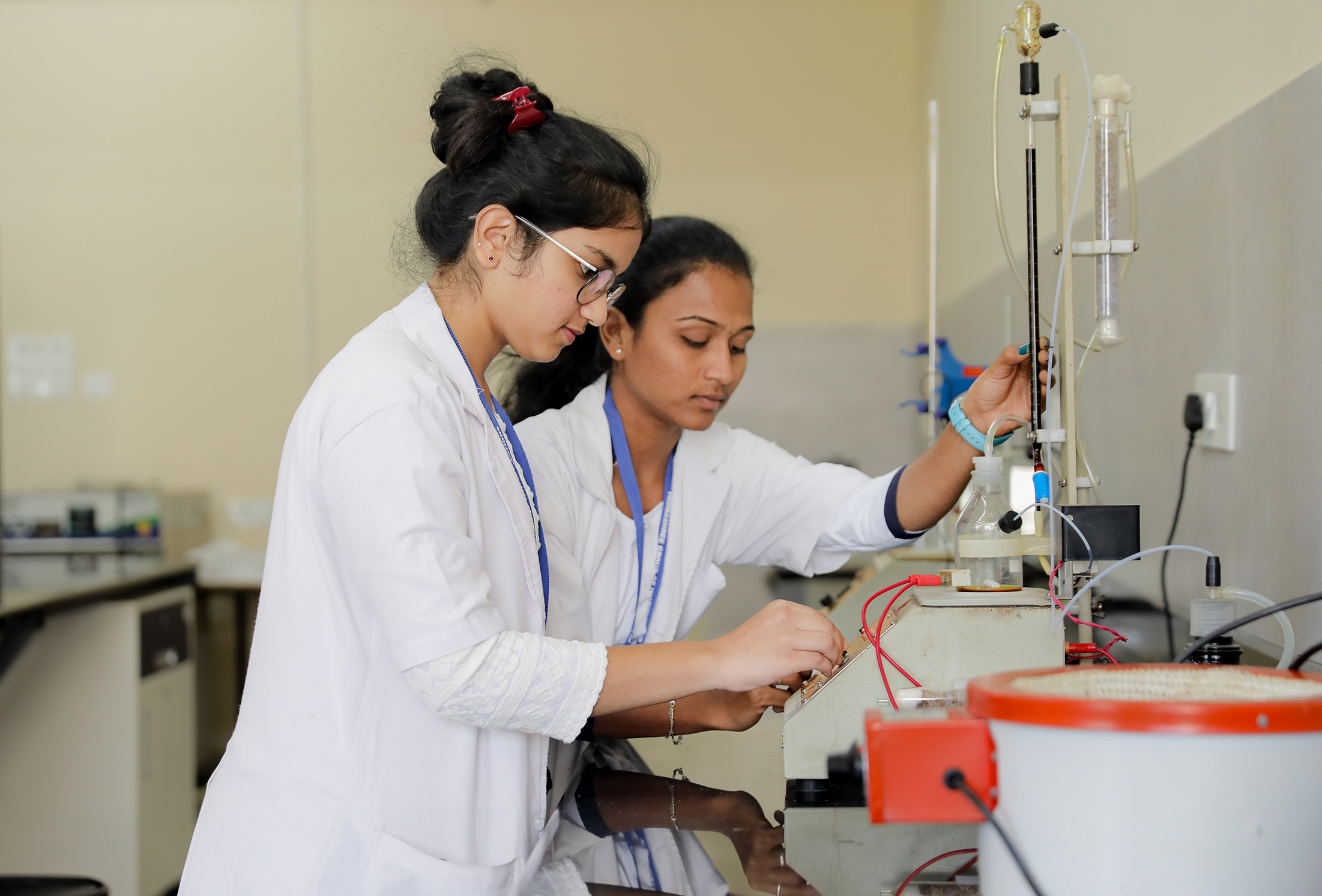
The students are encouraged to understand the basics through extensive practical classes. The industrial visits and internships are arranged to allow the students to gain insight into the application of the subject in the industry. The students are also assisted in applying for DBT, DST sponsored projects as well as assistance is given in preparation for JRF exams.
Affiliated to Rajiv Gandhi University of Health Sciences
2 Years (4 Semesters)
- Bachelor of Medical Laboratory Science from any recognised Indian University with atleast 50% aggregate
- Admission to MMLS shall be made on the basis of University entrance exam followed by interview. No direct Admission will be entertained.
- Entrance exams will be conducted based on the syllabus of BMLS. Successful candidates who cleared Exam should be called for the interview
- Interview panel should have Dean/Principal/Head of the department (Chairman of the board) Professor/ Associate professor and other members as per the policy of the institution whose recommendations shall be final for the selection of students
Powered By EmbedPress
- In view of recent advances in biochemistry, many new professions have been created for biochemistry majors.
- Those who discontinue after the B.Sc. degree often find themselves working as technicians in a variety of industries, but for those who go on for their M.Sc. or Ph.D., many more opportunities become possible.
- Graduates at all levels find positions in a wide variety of career areas, including forensic sciences, industrial chemistry, molecular biology, pharmacology, technical sales, virology, horticulture, immunology, forestry, and so on.
- But there are more careers one might not normally associate with the field of biochemistry.
- A research assistant works in the area of biochemical research and development as part of a team.
- They may investigate new genetic tests, be involved in genetic engineering or cloning, or help with the development of new drugs or drug protocols.
- In addition to performing typical technical biochemical procedures, the research assistant analyses data and prepares technical reports and summaries.
- Biochemical development engineers take the biochemical process developed in the laboratory and scale it up through the pilot plant stage to the full production plant.
- They help determine what instrumentation and equipment are needed and troubleshoot problems in the scale-up procedure.
- In view of recent advances in biochemistry, many new professions have been created for biochemistry majors.
- Those who discontinue after the B.Sc. degree often find themselves working as technicians in a variety of industries, but for those who go on for their M.Sc. or Ph.D., many more opportunities become possible.
- Graduates at all levels find positions in a wide variety of career areas, including forensic sciences, industrial chemistry, molecular biology, pharmacology, technical sales, virology, horticulture, immunology, forestry, and so on.
- But there are more careers one might not normally associate with the field of biochemistry.
- A research assistant works in the area of biochemical research and development as part of a team.
- They may investigate new genetic tests, be involved in genetic engineering or cloning, or help with the development of new drugs or drug protocols.
- In addition to performing typical technical biochemical procedures, the research assistant analyses data and prepares technical reports and summaries.
- Biochemical development engineers take the biochemical process developed in the laboratory and scale it up through the pilot plant stage to the full production plant.
- They help determine what instrumentation and equipment are needed and troubleshoot problems in the scale-up procedure.